





in Plant News
Flexible power needed to tackle grid constraints and energy uncertainty says Finning
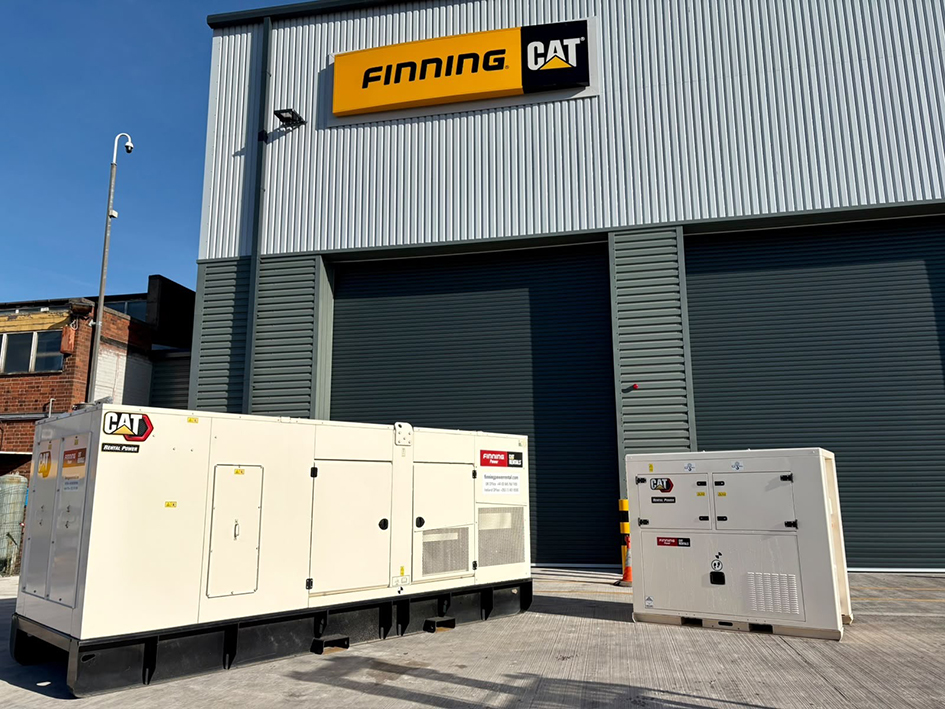
A flexible energy mix needs to be employed by organisations, using battery, gas and liquid-fuel back-up power solutions if they are to remain resilient in 2026 and beyond. This comes as ongoing grid constraints are compounded by continuing uncertainty across global energy markets.
Finning UK & Ireland is advising site managers responsible for ensuring reliability and performance across a range of applications to buffer against unnecessary downtime with hybrid systems.
For example, combining Stage-V compliant generators or larger generators with emissions after-treatment, alongside mains grid connections, and battery storage can create a flexible, cost-efficient energy supply. The approach is particularly useful for complex applications where energy demand varies.
Alongside liquid fuels and battery storage, gas-powered generator sets can also play a role in hybrid energy systems, particularly where a consistent fuel supply is available.
Gas generation can offer lower NOX, particulate and CO2 emissions compared to diesel-only configurations, making it well suited to applications operating under tighter environmental or planning constraints. It is also highly effective in continuous use, where it benefits from improved efficiency and reduced total cost of ownership.
Graham Scandrett, Head of Electric Power Sales at Finning UK & Ireland, said: “Recent volatility in global energy markets has reinforced the need for a more flexible approach to power. Grid expansion is underway. But capacity and connection challenges continue to affect projects across several industries. Distributed and rental power solutions, as a bridge-to-grid, are therefore being used to support operations when grid access is delayed or insufficient.
“What has become clear is that no single technology can meet all system needs. A practical transition will rely on a flexible mix of energy sources and solutions. This is what will maintain continuity for organisations and businesses.”
A hybrid energy solution can benefit a range of applications which traditionally rely on industrial generators including healthcare, construction, manufacturing, and data centres. By optimising a mix of power sources, operators can save fuel, reduce emissions and minimise equipment wear.
To learn more about power solutions from Finning, visit https://www.finning.com/en_GB/services/power-solutions.html
Hybrid systems can also distribute power according to site demand, integrating generators, grid connections and battery energy storage systems. Batteries can be charged at lower tariffs during off-peak periods, releasing power when it’s needed most, while generators are ideal for large scale deployments. Selecting the right generator size for power need can also avoid fuel waste and improve environmental impact.
Graham added: “To date, Finning has installed more than 600MW of gas equipment across the UK, supporting applications from load management projects that operate when the grid is under pressure to combined heat and power systems running base loads for around 7,000 hours a year.
“That experience gives us a clear understanding of where gas, liquid fuel, battery storage, grid supply and hybrid systems can each fit. In some cases, the priority will be a standby system that protects essential services. In others, it will be a prime power installation that becomes part of the energy mix every day.
“The important point is that the power strategy has to be designed around the site’s operating profile, compliance needs and available fuel supply, rather than around a single technology. Our role is to help customers identify the most practical, efficient and resilient solution for their conditions.”